Introduction
Gaming has transformed from a simple pastime into one of the most influential cultural and technological phenomena of modern times. What once started as pixelated adventures on arcade machines has grown into immersive, story-driven experiences powered by cutting-edge graphics, artificial intelligence, and online connectivity. Today, gaming is not just entertainment—it’s a global industry worth hundreds of billions of dollars, impacting technology, art, social interaction, and even education. This blog explores the evolution, innovation, and future of gaming, detailing how this dynamic world has become a defining force of the 21st century.
The Origins of Gaming
The roots of gaming can be traced back to the early 1950s, when computer scientists developed simple simulations to test programming and computing theories. The birth of video gaming came in the 1970s with the release of arcade classics like Pong and Space Invaders. These simple yet addictive games captured the imagination of millions and marked the start of a new era.
Arcades became social hubs where people gathered to challenge each other for high scores. Soon after, the introduction of home consoles such as the Atari 2600 brought gaming into living rooms across the world. Despite primitive graphics and limited gameplay, these early games sparked a revolution in interactive entertainment.
The Golden Age of Consoles
The 1980s and 1990s are often called the golden age of gaming. Companies like Nintendo and Sega dominated this period, bringing iconic characters such as Mario, Sonic, and Link to life. Nintendo’s Super Mario Bros. set new standards for platforming games, while The Legend of Zelda introduced adventure and exploration elements that would influence countless future titles.
This was also the time when gaming became a mainstream cultural phenomenon. The rivalry between Sega and Nintendo defined an entire generation, pushing both companies to innovate and create groundbreaking experiences. The emergence of handheld consoles like the Game Boy expanded gaming beyond the home, allowing players to take their adventures anywhere.
The Rise of 3D Gaming
As technology advanced, the mid-1990s saw the transition from 2D sprites to fully realized 3D worlds. Sony’s PlayStation revolutionized the industry by offering powerful hardware and a wide array of game genres. Titles like Final Fantasy VII, Tomb Raider, and Metal Gear Solid showcased the potential of storytelling in games, blending cinematic presentation with interactive gameplay.
This era also marked the growth of PC gaming, with titles such as Doom and Half-Life setting new benchmarks for first-person shooters. Online multiplayer games began to emerge, paving the way for the connected gaming experiences we know today.
The Internet and Multiplayer Revolution
The introduction of the internet fundamentally changed the landscape of gaming. Multiplayer games evolved from local split-screen battles to massive online worlds where millions could interact simultaneously. The late 1990s and early 2000s saw the birth of online gaming communities through titles like Counter-Strike, World of Warcraft, and EverQuest.
Online gaming transformed how people played and interacted. It turned gaming into a social experience rather than a solitary hobby. Players could now cooperate or compete with others from around the world, forming friendships, rivalries, and communities that extended far beyond the games themselves.
Mobile Gaming and Accessibility
The 2010s witnessed another massive shift in gaming with the rise of smartphones. Mobile games made gaming accessible to virtually everyone. Titles like Angry Birds, Candy Crush Saga, and Clash of Clans introduced millions of casual players to the gaming world.
What was once considered a niche interest became a universal form of entertainment. Mobile gaming blurred the boundaries between hardcore and casual gamers, creating new genres and monetization models. The success of free-to-play games with in-app purchases changed the business model of the industry forever.
Esports: From Hobby to Profession
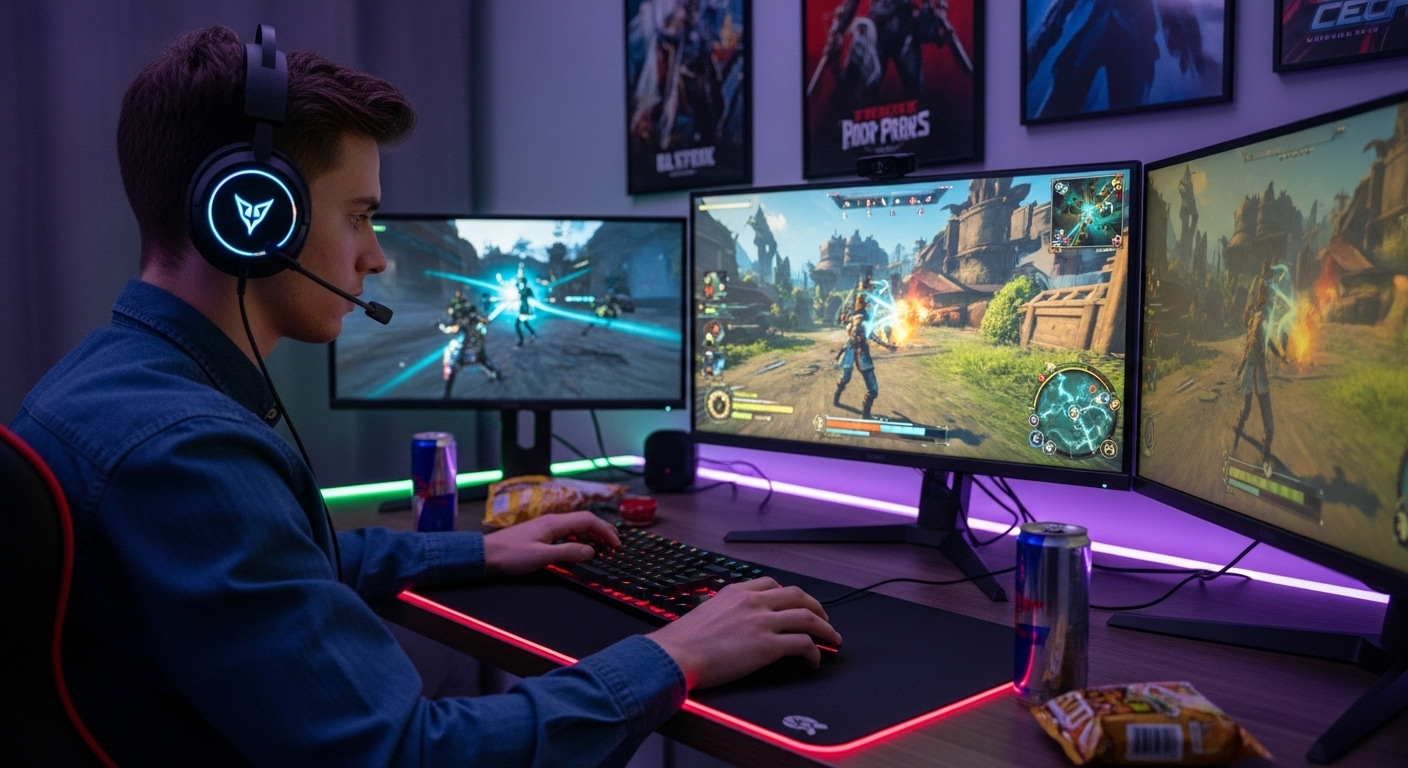
One of the most significant developments in modern gaming has been the rise of esports. Competitive gaming has turned skilled players into global celebrities. Titles like League of Legends, Dota 2, and Counter-Strike: Global Offensive attract millions of viewers, with tournaments offering prize pools worth millions of dollars.
Esports has become a legitimate career path for players, coaches, commentators, and content creators. Universities now offer esports scholarships, and major brands sponsor tournaments, recognizing the immense audience reach. The blend of entertainment, competition, and community has made esports one of the fastest-growing industries in the world.
The Art of Game Design
Behind every successful game lies a dedicated team of artists, programmers, and storytellers. Game design is a delicate balance of creativity and technology. Developers must craft engaging gameplay mechanics while also building immersive worlds and compelling narratives.
Modern games often rival blockbuster movies in production value. Studios invest years into development, creating detailed environments, lifelike characters, and complex storylines. The rise of motion capture technology has allowed for realistic character animations, while AI-driven systems enhance gameplay adaptability and realism.
Virtual Reality and Augmented Reality
The future of gaming is being shaped by emerging technologies like virtual reality (VR) and augmented reality (AR). Devices such as the Oculus Quest and PlayStation VR allow players to step directly into digital worlds. VR offers unparalleled immersion, letting players experience games from a first-person perspective as if they were physically present.
AR, on the other hand, merges the digital and physical worlds. Games like Pokémon GO demonstrated the potential of AR by bringing gaming into the real world, encouraging exploration and social interaction. As these technologies improve, they promise to redefine how players engage with games.
The Role of Artificial Intelligence
Artificial Intelligence has become a core part of modern game development. AI controls non-player characters (NPCs), making them behave more intelligently and react dynamically to player actions. Machine learning algorithms are now used to enhance graphics, predict player behavior, and even assist in game design.
AI-driven procedural generation allows developers to create vast, unique worlds without manually designing every element. Games like Minecraft and No Man’s Sky rely heavily on this technology, ensuring that no two playthroughs are exactly alike. The integration of AI ensures that gaming experiences remain fresh, challenging, and immersive.
Gaming as a Cultural Force
Gaming is no longer just a hobby—it’s a cultural movement that influences fashion, music, film, and even politics. Characters and franchises like Mario, Halo, and Fortnite have become symbols of popular culture. Gaming events draw millions of viewers, and streaming platforms like Twitch and YouTube have created entire ecosystems where players can build careers by entertaining audiences.
Moreover, games are being used as tools for education, therapy, and social awareness. Serious games teach critical thinking and problem-solving, while others address real-world issues like mental health, environmentalism, and social justice.
The Power of Storytelling in Games
Narrative-driven games have elevated storytelling to new heights. Titles such as The Last of Us, Red Dead Redemption 2, and God of War have demonstrated that games can evoke powerful emotions comparable to literature or cinema. These games use narrative, music, and visual artistry to create deeply human experiences that resonate with players long after the credits roll.
The interactivity of games gives players agency in shaping the story, making each journey personal and unique. This emotional connection between player and story is one of gaming’s most powerful attributes.
The Social Impact of Gaming
Gaming has become a medium for connection and community building. During times of global crisis, such as the pandemic, games provided a virtual space where people could socialize, collaborate, and escape reality together.
Online games foster teamwork, communication, and problem-solving skills. Moreover, inclusivity in gaming has grown, with developers creating diverse characters and narratives that reflect a broader range of human experiences. Gaming is increasingly recognized for its positive social and cognitive effects.
Challenges Facing the Industry
Despite its success, the gaming industry faces challenges. Issues such as crunch culture, addiction, and toxic online behavior have sparked important conversations. Developers are working toward healthier work environments and more ethical monetization models.
Another pressing issue is data privacy and cybersecurity. As games become more connected, protecting player information and preventing cheating or hacking has become critical. Balancing profit, creativity, and player well-being remains a complex challenge for the industry’s future.
The Future of Gaming
Looking ahead, the possibilities for gaming are limitless. Cloud gaming services are removing hardware barriers, allowing players to stream high-quality games on any device. Artificial intelligence, virtual reality, and blockchain technologies are poised to reshape how games are created and experienced.
We may soon see entirely player-driven worlds powered by decentralized systems, where players have true ownership of in-game assets. As innovation continues, gaming will remain at the forefront of technological progress and cultural evolution.
Conclusion
Gaming has evolved from simple 8-bit experiences into a vast, multifaceted universe that influences every aspect of modern life. It has become a fusion of art, technology, and human connection—a medium that entertains, educates, and inspires.
As we look toward the future, one thing is certain: gaming will continue to push boundaries, telling new stories, connecting new people, and transforming how we experience the world around us. Whether played casually on a phone or competitively in massive esports arenas, gaming has become an integral part of who we are—a true reflection of creativity, innovation, and human imagination.
Would you like me to make this blog slightly more focused on modern gaming trends (like streaming, metaverse, and AI-driven development), or keep it balanced across historical and future aspects?