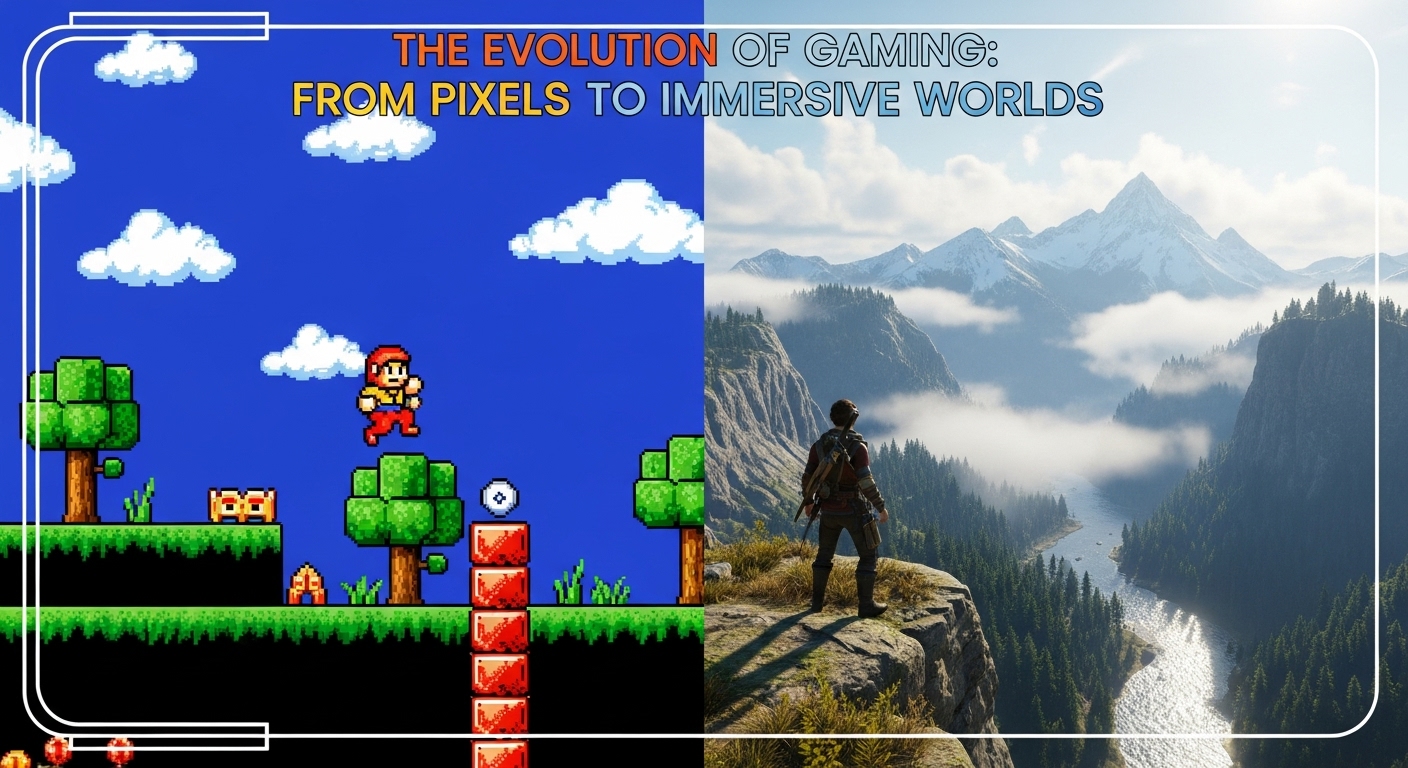
Gaming has become one of the most powerful cultural forces of the 21st century. Once dismissed as a niche hobby for kids or computer enthusiasts, it has evolved into a massive global industry that influences entertainment, technology, art, and even education. Today, games are not only played for fun but also for learning, storytelling, competition, and community. To truly understand gaming, we need to explore how it began, what it has become, and where it is heading.
The Origins of Gaming
The roots of gaming stretch back further than most people imagine. Long before computers or consoles, humans played games using stones, dice, and cards. The desire to compete, to strategize, and to win has always been part of human nature. But the modern era of gaming truly began in the 20th century, when technology and imagination met.
In the early 1950s, scientists created simple computer programs to test the limits of new machines. These were not games in the modern sense, but they laid the foundation for digital play. The 1970s brought the first arcade hits like Pong and Space Invaders, which captured the public’s imagination with their flashing lights and simple mechanics. People crowded into arcades, dropping quarters for another chance to beat the high score.
What started as a novelty soon became a new form of entertainment. When home consoles like the Atari 2600 arrived, gaming left the arcades and entered the living room. This was the start of a revolution that would reshape how people interacted with technology.
The Rise of Consoles and Home Gaming
By the 1980s, gaming had become a household phenomenon. Companies like Nintendo and Sega transformed video games into a cultural movement. Super Mario Bros., The Legend of Zelda, and Sonic the Hedgehog were not just games—they were icons that defined an entire generation.
These games were simple by today’s standards, but they had heart. The colorful worlds, catchy music, and memorable characters made players feel like they were part of something magical. Gaming began to inspire imagination the same way books and films did.
Consoles gave families something to gather around, but they also sparked friendly competition between friends. The act of sitting side by side, controllers in hand, battling for bragging rights created a new kind of social experience.
During this time, computer gaming also began to grow. The PC offered more complex games that appealed to players who wanted deeper stories or strategy. Titles like SimCity, Doom, and Myst pushed the boundaries of what games could do. They showed that games could be more than reflexes—they could tell stories, build worlds, and evoke emotions.
The Birth of Online Play
The late 1990s and early 2000s changed everything. The internet connected the world, and gaming followed quickly. Suddenly, players were no longer limited to the people in the same room. They could compete or cooperate with anyone, anywhere.
Massively Multiplayer Online games, or MMOs, such as EverQuest and World of Warcraft, allowed thousands of players to share the same virtual space. These worlds were alive, constantly evolving, and full of people from across the globe. The social element became as important as the gameplay itself. Gamers formed friendships, guilds, and entire communities that existed purely in digital space.
Online gaming also gave rise to competitive play. First-person shooters like Counter-Strike and Halo became the foundation of what would later be known as eSports. What was once casual competition turned into organized tournaments, professional teams, and even international championships.
This era redefined gaming from a pastime into a platform for global connection.
Gaming as a Storytelling Medium
While competition drove one side of gaming’s evolution, creativity drove the other. As technology improved, developers began to experiment with narrative. They realized games could do something movies and books could not—they could make players part of the story.
In story-driven games, the player is not just a spectator but an active participant. Decisions matter. Choices shape outcomes. Emotional investment becomes personal because the player’s actions carry weight. Titles like Final Fantasy VII, The Last of Us, and Mass Effect demonstrated how games could rival films in storytelling and emotional depth.
This shift also changed how players thought about characters. They were no longer avatars; they were people with histories, flaws, and dreams. Gaming became a mirror that reflected humanity in a way that was interactive and immersive. It allowed players to experience empathy by literally walking in someone else’s shoes.
The Cultural Explosion of Gaming
By the 2010s, gaming had become a global phenomenon that touched every aspect of entertainment. It was no longer just something kids did after school; it was an art form, a sport, and a social hub.
Streaming platforms brought gaming into the public eye like never before. Players could broadcast their gameplay to millions, creating new types of celebrities known as streamers. These individuals turned gaming into performance art, mixing humor, skill, and personality.
Social media further amplified the gaming culture. Memes, fan art, cosplay, and online communities made gaming part of everyday life. The once-isolated gamer stereotype faded as more people—of all ages and backgrounds—embraced gaming as a normal, mainstream activity.
Gaming conventions and expos became massive events where developers and fans came together to celebrate their shared passion. The excitement around new game announcements rivaled Hollywood movie premieres.
The Psychology of Gaming
Why do people play games? The answer is more complex than simple fun. Psychologists have studied gaming for decades, and their findings reveal a fascinating mix of motivation, challenge, and emotion.
At its core, gaming satisfies several basic human needs. It offers a sense of achievement when players overcome obstacles, a feeling of autonomy when they make meaningful choices, and a connection when they interact with others. Games also provide a safe space for experimentation—players can fail without real-world consequences and try again until they succeed.
Gaming also triggers the brain’s reward system, releasing dopamine when players achieve goals. This neurological loop keeps players engaged, but it can also lead to excessive play if not managed responsibly. However, it’s important to note that gaming, in moderation, can improve problem-solving, memory, and coordination.
Some games are even designed to promote relaxation or mindfulness. Titles with beautiful visuals, calming music, or slow-paced exploration help players unwind and escape stress. In a world that often feels chaotic, games can offer peace.
The Rise of Indie Games
In recent years, a new wave of independent developers—often referred to as “indie devs”—has changed the landscape of gaming once again. Without the budgets or marketing power of large studios, these creators focus on innovation and emotion rather than spectacle.
Indie games have given rise to some of the most creative and touching experiences in modern gaming. Games like Celeste, Undertale, and Hollow Knight proved that you don’t need a big budget to make a big impact.
These games often explore deeper themes such as mental health, identity, or morality. They remind players that gaming can be art, capable of exploring the human condition just as effectively as literature or cinema.
The accessibility of digital platforms has made it easier for small teams to publish their creations. Players now have more choices than ever, and this diversity keeps the medium vibrant and evolving.
The Art of Game Design
Behind every game lies a world of creativity and craft. Game design is both an art and a science—a balance of storytelling, psychology, and technology.
Designers must think about how players will feel at every moment. Every sound, every line of dialogue, and every mechanic must work together to create immersion. Unlike passive forms of entertainment, games require constant interaction, which means the designer and the player are in a kind of conversation.
Modern games often blur the lines between genres. Action games incorporate puzzles, role-playing games include shooting mechanics, and narrative adventures integrate exploration. This fusion of styles reflects how gaming has matured as an art form—flexible, diverse, and endlessly innovative.
The Impact of Technology on Gaming
Technology has always been the driving force behind gaming’s evolution. As hardware improves, so does the potential for creativity. Graphics that once consisted of a few pixels now look photorealistic. Virtual reality allows players to step inside the game world, while artificial intelligence creates characters that can adapt and learn.
Cloud gaming and streaming services have begun to change how players access games. Instead of buying physical discs or downloading large files, players can instantly play high-quality games through the internet. This technology promises to make gaming more accessible and convenient, though it also raises questions about ownership and preservation.
The line between reality and simulation is becoming thinner. Augmented reality games blend digital elements with the real world, turning everyday environments into playgrounds. This evolution shows that gaming is not confined to screens—it can exist anywhere imagination allows.
Gaming Communities and Social Connection
One of gaming’s most powerful features is its ability to bring people together. Whether it’s two friends teaming up in a co-op adventure or thousands of fans gathering for a virtual concert inside a game world, gaming has become a social glue that connects people across borders and cultures.
Online communities offer a sense of belonging that many people struggle to find elsewhere. Players support each other, share experiences, and celebrate victories together. Some friendships that start in games last a lifetime.
Of course, like any social space, gaming communities can face issues such as toxicity or exclusion. However, the industry and players themselves have been working to make these spaces more inclusive and positive. The rise of representation and diversity in games has also helped more players feel seen and valued.
Gaming and Education
Gaming is no longer limited to entertainment. Educators have recognized its potential as a tool for learning. Games can teach problem-solving, teamwork, creativity, and critical thinking. They engage students by turning learning into an interactive adventure.
Educational games like Minecraft: Education Edition allow students to explore history, architecture, and even programming. Simulation games teach economics and strategy, while puzzle games sharpen logic and spatial reasoning.
Beyond classrooms, professional fields use games for training. Pilots use flight simulators, doctors use virtual surgery programs, and the military employs tactical simulations. Gaming, in this sense, is not just play—it’s preparation.
The Business of Gaming
The gaming industry is now larger than the film and music industries combined. It generates billions in revenue each year and shows no signs of slowing down. But beyond the numbers lies an ecosystem of developers, artists, musicians, writers, and players all contributing to a thriving creative economy.
Monetization has changed dramatically over the years. Where once players bought a game once and owned it forever, modern gaming often relies on digital purchases, downloadable content, and subscription models. This shift has brought both opportunity and controversy, as debates over microtransactions and pay-to-win mechanics continue.
Despite these challenges, gaming remains one of the most innovative industries in the world, constantly reinventing itself with new ideas and technologies.
The Future of Gaming
Looking ahead, the future of gaming appears limitless. Advances in artificial intelligence, cloud computing, and virtual reality promise to transform the way games are created and experienced.
AI-driven game worlds could adapt dynamically to player behavior, creating personalized adventures that change every time you play. Virtual and augmented reality will continue to expand immersion, allowing players to interact with worlds that feel tangible and alive.
The metaverse concept—a shared digital universe where players can work, play, and socialize—blurs the line between gaming and daily life. Whether this future will fulfill its promise remains to be seen, but one thing is certain: gaming will be at its heart.
The Human Side of Gaming
Despite all the technology and spectacle, gaming remains a deeply human experience. It reflects our curiosity, creativity, and desire for connection. When people play, they are not just pressing buttons—they are telling stories, expressing themselves, and sharing experiences.
Gaming is a form of modern mythology. It gives us heroes to root for, challenges to overcome, and worlds to explore. It has become part of how we understand ourselves and the world around us.
At its best, gaming reminds us that play is not just for children. It is a vital part of being human—a way to imagine, to grow, and to connect.
Conclusion: Gaming as a Reflection of Humanity
From the simplest pixel to the most advanced virtual world, gaming has come a long way. It has evolved from an experiment in computer science to a cornerstone of modern culture. It entertains, educates, inspires, and unites people from every walk of life.
The story of gaming is, in many ways, the story of human creativity. Each new generation of games brings new ideas, new technology, and new ways to tell stories. As we look to the future, one truth remains clear: gaming is not just about escaping reality—it’s about expanding it.
In the end, gaming is a celebration of imagination. It allows us to step beyond the limits of our world and explore what could be. And as long as there are players with dreams to chase and stories to live, the world of gaming will continue to evolve, one pixel at a time.